
How therapists actually treat panic: training the brain to stop fearing the feeling
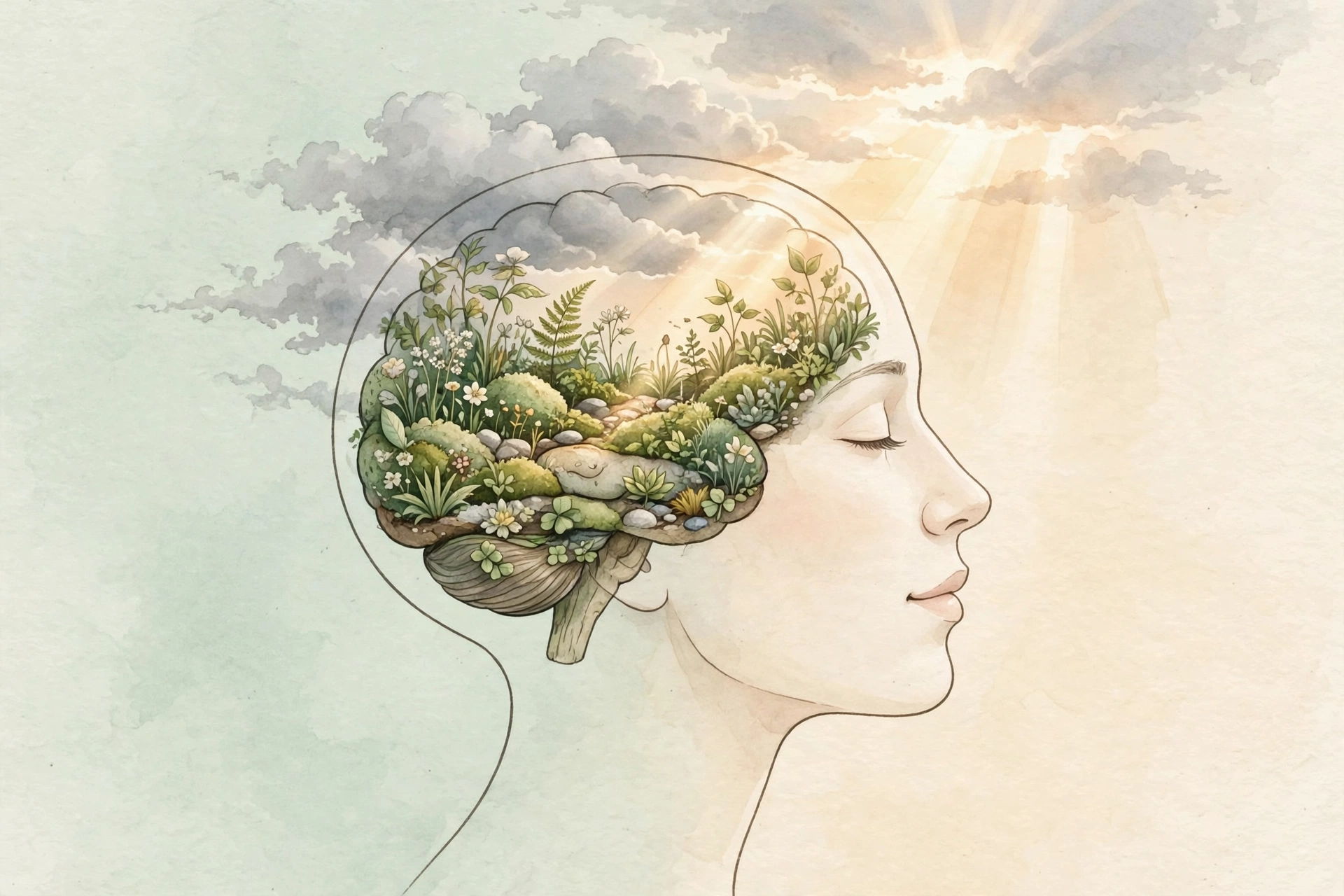
Patients often tell me their first panic attack felt like dying. Then the second fear arrived, quieter and more corrosive than the attack itself. The fear of the next one. The grocery store that is suddenly off limits. The highway that is suddenly unthinkable. The life that slowly shrinks around one question: what if it happens again. That second fear is what therapy treats. Not only the panic, but the fear of the panic.
Good panic therapy starts by naming the alarm. A panic attack is the body running its full fight or flight sequence with no real threat present. Adrenaline rises, the heart pounds, breathing quickens, blood shifts toward the muscles. A therapist walks you through this physiology slowly, because the pounding heart is not a heart attack in progress and the air hunger is not suffocation beginning. It is a protection system firing blanks. This education is not small talk. It is the foundation everything else stands on, because you cannot argue with a catastrophe you still believe is real.
Then comes the work on the thought itself. In the middle of a panic attack, the mind does not whisper. It declares. I am dying. I am going crazy. I am about to collapse in front of everyone. Cognitive restructuring teaches you to catch that declaration and test it the way a scientist would. How many times has the prediction come true. What actually happened the last fifty times. What would you tell a friend who described these exact symptoms. The therapist does not hand you reassurance. She asks the questions that let your own evidence dismantle the catastrophe. A large review of meta analyses found that cognitive behavioral therapy has among the strongest evidence bases in all of medicine, with its strongest support in the anxiety disorders.
The technique many patients never hear about, and the one that does some of the heaviest lifting, is interoceptive exposure. The word means exposure to the inside of the body. In a safe office, the therapist deliberately provokes the exact sensations you fear most. Spinning in a chair until the room tilts. Breathing through a narrow straw until the air feels thin. Running in place until the heart hammers. This sounds strange until you understand the logic. Your brain has fused a sensation with a catastrophe. The only way to break the fusion is to meet the sensation on purpose and let the brain watch nothing terrible happen.
This is also where the science of exposure quietly changed. The older theory said the goal was habituation, that each exposure should feel a little calmer than the last. Newer work argues the goal is inhibitory learning. The original alarm memory is never really erased. Instead, a new safety memory is built on top of it, and the brain learns that the sensation predicts nothing dangerous. Under this view, feeling calm during the exercise is not the point. What matters is the mismatch between what you expected and what happened. You predicted catastrophe, and catastrophe did not come. Therapists now design exposures to maximize that violation of expectation, varying the setting, removing safety crutches one at a time, and spacing practice so the learning generalizes to real life.
The same principle extends outward to in vivo exposure, a plain name for going back to the places panic took from you. The store. The gym. The passenger seat. The rule stays the same. You do not wait until you feel no anxiety to walk in. You walk in with the anxiety and let the brain collect the data it has been refusing. The learning happens while the anxiety is present and the feared outcome still does not arrive.
Breathing work deserves an honest note, because it sits on a fault line. Research on panic and respiration found that many patients chronically overbreathe, keeping carbon dioxide low, which itself primes the body's suffocation alarm. In one study, four weeks of capnometry assisted breathing training that normalized carbon dioxide reduced patients' fear of bodily sensations, and the change in breathing chemistry mediated the change in fear. So breathing training is real medicine. But modern therapists use it with care. If you reach for slow breathing only to escape a panic attack, the breathing becomes another safety behavior, a signal to the brain that panic is dangerous and must be stopped at all costs. Used as a skill and tested against fear, it heals. Used as an escape hatch, it maintains the problem. That distinction is the whole art.
Here is what I want every patient to know. Panic disorder is one of the most treatable conditions in psychiatry. A standard course of therapy runs about twelve to fifteen sessions, and medication can be added alongside when attacks are frequent or avoidance is deep. A panic attack will not give you a heart attack, will not stop your breathing, and will not make you lose your mind, no matter how completely it feels otherwise. One caution belongs here too. If panic like symptoms begin after forty, or if chest pain comes on with exertion rather than at rest, see a physician first. Therapy treats panic. It does not treat a heart.
Anthony
Sources: Craske MG, Treanor M, Conway CC, Zbozinek T, Vervliet B, Behaviour Research and Therapy (2014), maximizing exposure therapy with an inhibitory learning approach. Hofmann SG, Asnaani A, Vonk IJ, Sawyer AT, Fang A, Cognitive Therapy and Research (2012), the efficacy of cognitive behavioral therapy, a review of meta analyses, PMID 22275847. Meuret AE, Wilhelm FH, Roth WT, Behavior Modification (2001), respiratory biofeedback assisted therapy in panic disorder. Meuret AE et al., Journal of Psychiatric Research (2008), changes in respiration mediate changes in fear of bodily sensations in panic disorder, PMID 18835608.